Bianca
The Lost DaughterBianca, the elder daughter of Leda and Gianni, is presented chiefly through Leda’s memories and later reflections on their relationship. Her childhood brings Leda both tenderness and strain: Bianca tries to care for her mother in play, while Leda’s exhaustion sometimes turns into anger. After Bianca and her sister Marta move to Toronto to live with their father, their bond persists across distance in hurried calls and practical requests. The contrast between their continuing demands and Leda’s sense of release makes Bianca central to the book’s unresolved account of maternal attachment.
Identity and Family Background
Bianca was born when Leda was twenty-three, during a difficult period in which Leda and Gianni were both struggling to establish themselves at the university. Leda later recalls that, after Bianca’s birth, she planned to have another child so Bianca would not grow up alone; Marta followed. Gianni travelled widely for work and took little day-to-day care of the girls, but Leda describes him as kind and says their daughters loved him. When present, he could make an effort to play with them.
The family’s movements and divisions shaped Bianca’s early life. Leda feared that, after she left, Gianni might take the girls to Naples and leave them with Leda’s mother and relatives. Although Gianni did care for his daughters, work and travel sometimes led him to leave them with their maternal relatives for months. Leda later brought Bianca and Marta to Florence. The account establishes this as a source of Leda’s anxiety and regret, but does not specify how Bianca herself understood those changes.
Childhood and the Strain of Care
One of Leda’s most intimate memories of Bianca comes from their play under the kitchen table, which served as a little house. Bianca made Leda lie down and treated her as though she were ill, giving her medicine and brushing her teeth and hair. Leda was often exhausted: Marta slept poorly, and Bianca wanted her mother’s attention and resisted going to day care. Even so, Leda tried to remain patient and to be a good mother. The game offered Bianca a way to care for Leda, but its closeness also took place within the demands that Leda found difficult to bear.
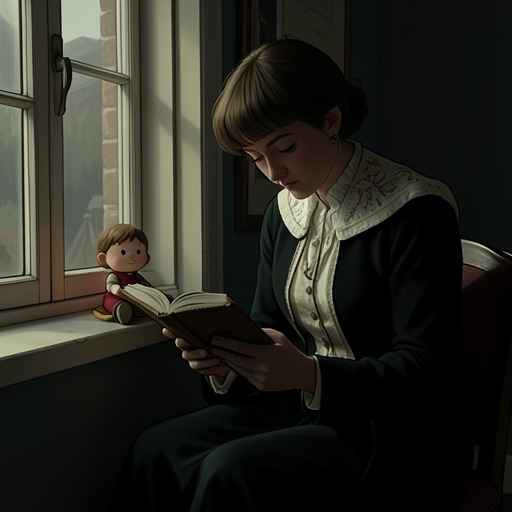
Leda’s childhood doll, Mina, became the focus of a later rupture. Hoping to ease Bianca’s jealousy of her younger sister, Leda gave her the doll and expected her to cherish it. Bianca instead preferred a rag doll brought by Gianni. When Leda later found Bianca sitting on Mina and playing with another toy, she rebuked her and claimed the doll back. Bianca insisted it was hers; Leda discovered that Mina had been marked and had lost her clothes and shoes. Leda threw the doll from the balcony. She then picked Bianca up and held her, an abrupt movement from anger toward tenderness that makes the episode more than a simple dispute over a toy.
Another remembered incident shows how readily ordinary interaction could turn into conflict. While Leda was struggling to finish an academic essay, five-year-old Bianca struck her ear, apparently thinking a game had begun. Leda responded by hitting Bianca repeatedly and sending her out of the room so she could work. She remembers that the action became real violence rather than discipline. The scene places Bianca’s playful imitation and bid for attention beside Leda’s frustrated pursuit of research, recognition, and time of her own.
Separation and the Interrupted Return
When Leda returned after an absence of two months, she brought dresses for Bianca and Marta. Gianni asked her to try again with the family, but she refused. Bianca and Marta came to Leda in the kitchen with an orange and a knife, asking her to make the peel into a snake. Leda began peeling the fruit, aware that her daughters hoped to draw her into their world; she nevertheless left. For three years she neither saw nor heard from them. The small domestic request thus marks the point at which a moment of shared attention gives way to prolonged separation.
Leda’s reflections make clear that distance did not remove the daughters from her thoughts, but it changed how she experienced responsibility. She feared that they would be returned to the family world in Naples from which she had tried to escape, yet she did not reverse her decision to leave. Later, when she brought the girls to Florence, her anger toward her own mother shaped accusations about the influence of that childhood home. These memories frame Bianca’s family history through Leda’s divided perspective: she worries about what her daughters inherit, while also acknowledging that she left them exposed to circumstances she feared.
Adult Relationship and Distance
After Bianca and Marta move to Toronto, where Gianni has lived and worked for years, Leda is surprised not to feel upset. She experiences the quiet house and the end of daily shopping and laundry as a release from nearly twenty-five years of constant care. Her contact with the girls is reduced largely to a daily call. They speak as though they were on their own, even though they live with Gianni, and tend not to mention him to Leda. Their calls can be evasive, irritable, or shaped by the presence of friends; they are often hurried and sometimes feel artificial to her.
Bianca calls particularly often and has, in Leda’s description, a more demanding relationship with her. Her requests range from advice about whether blue shoes will match an orange skirt to help finding and urgently sending papers. The daughters also turn to Leda as someone they can blame for their anger and sorrows. Leda usually responds as expected. Because she cannot intervene directly across continents, meeting their wishes becomes, in her account, a lighter and more distant form of care: practical acts that preserve a bond while allowing her to feel less burdened by it.
Leda also remembers a long-running competition between Bianca and Marta over the distribution of her attention and possessions. As children, they compared toys, sweets, and even the number of kisses they received; later, the accounting extended to clothes, shoes, vehicles, and money. Leda believes both daughters have come to treat concrete services and goods as measures of affection, because they have felt that her love is transient. She worries that they may regard her chiefly as a material inheritance to be divided after her death. This is Leda’s interpretation of their relationship, not a direct account of Bianca’s own view, but it explains why requests that seem minor to others carry such emotional weight for her.
Narrative Role and Later Contact
Near the end of the account, as Leda prepares to leave, Bianca and Marta call together. They ask why she has not called and whether she will at least tell them if she is alive or dead, playfully exaggerating her Neapolitan cadence. Leda answers in the same darkly comic register that she is dead but fine. The exchange does not resolve the estrangement or erase the years of separation. Instead, its shared joke suggests a continuing familiarity that survives in the sisters’ voices and in Leda’s recognizable way of speaking.
Bianca’s characterization remains limited by the narrative’s focus on Leda: the reader sees her most clearly in remembered gestures, childhood disputes, and adult calls. Across those scenes, she is both a child seeking care and a daughter who continues to ask practical and emotional things of her mother. Leda’s responses move between patience, anger, withdrawal, and accommodation. Bianca’s significance lies in that unsettled bond, where affection is neither absent nor sufficient to make the history of abandonment and hurt disappear.